
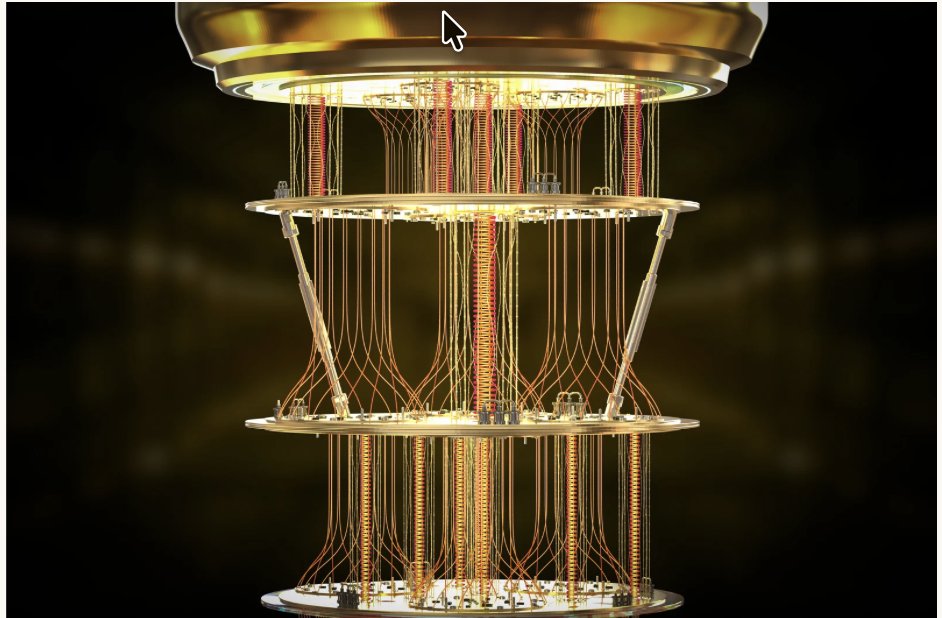
Though still in its infancy, quantum computing is on the rise and set to disrupt encryption and optimization. Exciting times lie ahead!
As this revolutionary technology develops, industries worldwide are beginning to foresee and adapt to the changes it promises. Quantum computing, with its capacity to execute intricate calculations at unmatched speeds, has the potential to transform fields such as:
– Cryptography
– Logistics
– Pharmaceuticals
– Artificial Intelligence
The Impact on Encryption
In the encryption realm, quantum computers pose a threat to traditional systems by breaking codes previously deemed unbreakable, like RSA encryption. This has ignited a race to create quantum-resistant algorithms to secure data in a post-quantum landscape. For example:
– By 2025, major providers like Cloudflare will have safeguarded over half of human-initiated internet traffic with post-quantum encryption.
– Governments, including the US (aiming for full migration by 2035), Australia (by 2030), and the EU (between 2030 and 2035), have set roadmaps for transitioning to standards like NIST’s ML-DSA and SLH-DSA.
– Companies are also adopting quantum-safe hardware security modules (HSMs) to protect keys from future threats.
Quantum Advantage in 2026
Forecasts indicate that IBM will achieve community-verified quantum advantage by the end of 2026, solving real-world problems (e.g., in chemistry and optimization) faster or more efficiently than classical supercomputers, often using hybrid setups. Notable advancements include:
– Google’s Willow chip and AI-driven error suppression (like AlphaQubit) demonstrating scalable stability in 2025.
– AI-assisted error correction becoming mainstream in 2026, with more complex logical operations showcased by companies like Quantinuum, IonQ, and QuEra, targeting systems with tens to hundreds of logical qubits.
– Modular architectures advancing with IBM’s Kookaburra (2026) integrating quantum memory and processing, Pasqal aiming for 10,000 physical qubits, and PsiQuantum pushing photonic systems toward million-qubit scales.
– Hybrid computing taking precedence, where quantum processors tackle challenging sub-problems (simulations, optimizations) while classical HPC/AI handles the remainder. Cloud access from AWS, Microsoft, Google, and IBM democratizes this with pay-as-you-go models.
Optimization Transformation
Another sector poised for change is optimization, where quantum computing can tackle complex issues currently beyond classical computers. This advancement could lead to significant improvements in:
– Supply chain management
– Financial modeling
– Climate predictions
Real-world applications include:
– IBM’s hybrid quantum-classical methods optimizing delivery routes for thousands of locations in busy urban areas like New York City.
– Companies exploring the Vehicle Routing Problem (VRP) or Traveling Salesman Problem (TSP) to cut fuel costs and emissions by 10–20%.
– Quantum-inspired algorithms dynamically rerouting shipments and optimizing extensive networks, such as Coca-Cola Japan’s vending machine distribution.
Path to Fault-Tolerance (2029+)
The goal of full fault-tolerant quantum computing—executing millions of error-corrected operations reliably—targets the late 2020s:
– IBM: Starling system by 2029 with approximately 200 logical qubits.
– IonQ: Achieving cryptographically relevant scales by 2028–2030.
– Other firms: Microsoft (topological) and PsiQuantum (photonic) hold potential for breakthrough advancements if engineering challenges are resolved.
Market consolidation, increased funding, and geopolitical investments will fuel progress, though doubts remain about exact timelines for breaking encryption (unlikely before 2030 for RSA-2048).
Preparing for the Quantum Future
To navigate this quantum era, businesses and researchers are investing in education and infrastructure. By cultivating a workforce versed in quantum principles and forming partnerships with leading quantum technology companies, they aim to unlock the full potential of this innovative field. The journey toward a quantum-enabled future is just beginning, and early adopters may lead the charge in innovation.
Advancements in Pharmaceuticals and AI
In pharmaceuticals, quantum simulations allow for precise modeling of molecular interactions, speeding up drug discovery. Notable collaborations include:
– Pasqal with Qubit Pharmaceuticals: Faster protein hydration analysis.
– Pfizer and Gero: Utilizing hybrid quantum-classical methods for fibrotic disease targets.
– Google’s Quantum AI: Progress in computing molecular geometries potentially shortening drug development timelines from years to months for complex candidates like Alzheimer’s treatments.
Quantum computing also stands to enhance artificial intelligence by optimizing the training of large models and simulating quantum systems for improved pattern recognition. Examples include:
– Chinese researchers fine-tuning billion-parameter AI models on quantum hardware.
– Hybrid approaches where quantum processors address complex chemistry issues while classical systems manage data volumes, paving the way for a more efficient and powerful AI landscape in healthcare and beyond.
Transformative Impacts
– Drug Discovery & Materials: Accelerated molecular simulations could reduce development timelines from years to months.
– Optimization & AI: Transforming logistics, finance, and machine learning training.
– Cybersecurity: Urgent adoption of post-quantum cryptography; quantum key distribution for ultra-secure connections.
– Beyond: Applications in climate modeling, fusion energy design, and fundamental physics.
While full-scale, universal quantum computers may emerge in the 2030s, 2026 marks the onset of practical utility. Early adopters employing hybrid tools today will lead the next wave of innovation. The journey is speeding up—exciting times await!